Winter
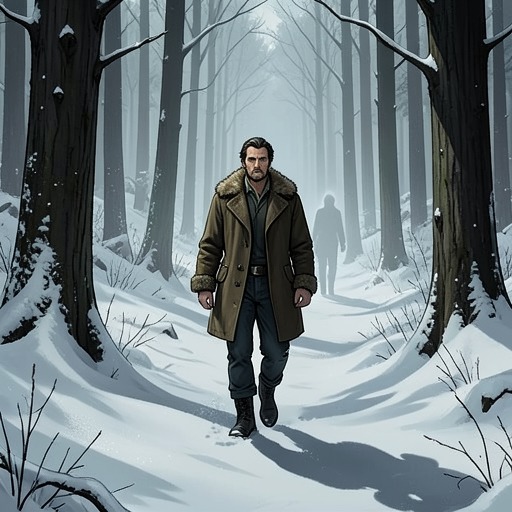
Doctor ZhivagoWinter is both a lived condition and a recurring poetic frame in the novel. It makes deprivation tangible in the rooms and streets of post-revolutionary Moscow, accompanies private encounters with bereavement, and reappears in the poems as an immense landscape of snow and seasonal transition. Set against spring and the approach of Easter, winter marks not a single mood but a tension between hardship, memory, and the possibility of renewal.
Winter in the City
A gray winter Sunday in Flour Town shows the season through the strained routines of communal life. Smoke rises in columns from rooftops and in thin black streams from windows whose stove pipes remain in use despite regulations. The amenities of town life have not returned, and tenants go about unwashed, suffering from boils and colds. The scene places winter inside the material conditions of the city rather than treating it as a distant landscape.
At the Shchapovs’ kitchen table, that hardship is measured against an altered system of control. During bread rationing, tenants’ coupons had been collected, sorted, and bundled there; loaves were then cut and crumbled to meet each person’s allotted weight. By the winter Sunday described later, those tasks belong to memory: food rationing has given way to other forms of control, and Markel Shchapov’s family eats its fill. The table thus holds two distinct histories of scarcity and relative plenty, while the surrounding cold and neglected housing remain.
Winter and Private Grief
Winter also accompanies the novel’s intimate experience of loss. As a boy, Yura prays for his dead mother, asking that she be received into heaven and spared suffering. In his anguish he calls to her as though she were a saint, then collapses unconscious. When he wakes, his uncle is calling from above. The episode joins a child’s grief to religious language, with winter’s wider atmosphere of hardship forming the background to a loss that cannot be made ordinary.
In a different register, a church service gives winter a public and ritual setting. The congregation sings a psalm in a new church whose plain window looks out on a gray, snowbound street. The hollow echo inside and the commonplace activity outside coexist with the words of worship. Lara makes her way through the worshippers with pennies in her fist, buys two candles for herself and Olia, and returns as the psalmist recites the beatitudes. The cold season does not suspend ordinary need or distraction; sacred words and the winter street occupy the same scene.
Winter’s emotional register is not limited to grief. During Anna Ivanovna’s long coughing fit, Yura and Tonia hurry to her bedside together. She takes their hands and holds them joined, then tells them that if she dies they should stay together and marry. Her blessing turns an approaching death into a promise of shared life. The moment’s force comes from its bodily circumstance—the cough, the joined hands, the bedside—and from the future that Anna tries to secure for them within it.
From Winter to Spring
The novel’s seasonal imagery is explicitly comparative. A passage describing the first signs of spring presents thaw as a sleepy return to life: the air recalls the food and drink of Shrovetide, the sun and pines seem to blink, and the countryside stretches before sinking back into sleep. The reference to spring in Eugene Onegin brings with it a deserted house, a grave beside a stream, and a nightingale singing as the wild rose blooms. Renewal therefore arrives alongside absence and remembrance, not as a simple erasure of winter.
The poems make seasonal transition more expansive. One poem places the days from Maundy Thursday to the eve of Easter beside rising waters that gnaw at riverbanks. Religious observance and natural change share a measure of time: the spring waters move through a period marked by the Christian calendar. The passage gives seasonal motion a devotional frame without reducing it to a mere illustration of doctrine.
Winter in the Poems
“WINTER NIGHT” opens with snow falling over the whole world, a repeated image that gives winter an encompassing scale. In “STAR OF THE NATIVITY,” winter is identified directly as the season in which the wind blows across the plain. These poems use winter as a setting for images of distance and exposure, while the Nativity title places the cold landscape in relation to religious beginnings.
Across the novel and its poetry, winter recurs in several distinct forms: the cold, smoke-filled city; the snowbound view beyond the church window; the season around a child’s prayer and an old woman’s blessing; and the sweeping weather of the poems. Its significance depends on those contrasts. Winter makes deprivation and grief concrete, but it also provides the seasonal boundary from which thaw, spring, and Easter can emerge.